Friday, August 31, 2007

Sept. 2, 2007: 22nd Sunday Ordinary (C)

First Reading:Sirach 3:17-18, 20, 28-29
Psalm:Psalm 68:4-7, 10-11
Second Reading:Hebrews 12:18-19, 22-24
Gospel:Luke 14:1, 7-14

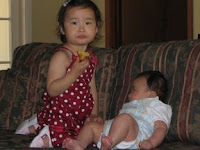
Being little has its advantages. My sister's two-year old little Therese can get much of what she wants because she is little. If she wants a banana on the kitchen table, all she has to do is point to it and her mama or daddy will get it for her. If she can't see something, even when she is on her tiptoe, all she has to do is open up her arms to reach for one of her uncles, and we are more than glad to stoop down to lift her up. At this age she is also very docile. When I tell her to bring over fresh diapers for her little brother, she'll bring it without hesitation. When I want a kiss from her, all I have to do is tap on my cheek with one of my fingers and she'll run over to give me a kiss. In a year or two there is going to be a change in her personality. She'll begin to assert herself and mimic what the adults do. She'll learn the powerful word 'no,' and will use it on every occasion. I'll say “Therese bring the diaper bag,” and she'll say “No!” Her mama will say, “Therese, eat your vegetables,” and she'll say “No!” She'll also rummage through her mama's purse and dig out make-up and try to put it on her face like her mama does.


Little Therese will be “getting too big for her pants” as the saying goes. Applied to children this phrase implies that the child is insisting that she be treated as older or bigger than she really is. When this phrase is applied to adults, it implies that a person is becoming so 'swollen' with conceit or an exaggerated sense of their own self importance that their pants no longer fit. It is not a flattering phrase for adults. Nor was it a flattering phrase for those who attended a dinner party for a leading Pharisee.


Our Lord, seeing how some of the dinner guests were jockeying for the places of honor at the table, said in essence that some of them acted as if they were getting too big for their pants. Some of these people had exaggerated sense of self-importance to the point that they thought they deserved to be at the head table. They thought they had such a close relationship with the man of the house that surely he would have asked them to be at the head table anyway. How embarrassing and humbling in front of other guests, that they were asked to go to the last table where the least important guests are seated. As Jesus said, "For everyone who exalts themselves will be humbled." Those who were getting too big for their pants will be put back in their rightful place. Jesus then instructs us, "When you are invited, go and take the lowest place so that when the host comes to you he may say, 'My friend move up to a higher position.'”


Our Lord puts us back into our place--that is, he humbles all of us not to be presumptuous about our relationship with Him. Yes, we are given the privilege to be children of God through our Baptism. But it was a gift from God, not something we deserved or earned. We are invited in this life and in the next to be in the eternal banquet with God. But this invitation was also a gift from Him. None of us can boast that we have earned our way to the head table. We can never repay God for this invitation, for what can we, frail and weak creatures possibly do for Almighty God who created the universe and sustains all living things by His sheer gift. In God's eyes, we are only humus, dirt of the earth molded in his hand and animated by His breath. If we are talented, gifted, well respected, and well-off, it's because we are mere clay jars where God has, for the time being, decided to store these gifts. We never know when God will empty out our jars, for our health, talents, and wealth can be shattered at any moment. If we think we are anything other than a little molded clay jar, then we are getting too big for our pants.


But there is an advantage to being little and frail. And St. Therese of Lisieux has discovered this secret. She calls it the "Little Way." She knew in her heart that she desired to become a saint, and she knew that God did not place this desire in her heart if He did not intend to fulfill it. She knew that she was little, frail, and full of faults; she was humble for humility in knowing the truth that she was only a fragile clay jar. Despite her littleness, she was resolved to find a way to reach heaven by a little way which is very short and very straight. At that time, lifts or elevators were just being invented. Using this image, St. Therese was determined to find an elevator to carry her to Jesus, for she was far too small to climb the steep stairs of perfection. Then she discovered in scripture, "Whosoever is a little one, come to me." This was a marvelous discovery. Jesus was going to be the elevator to lift her to heaven. She said, "It is your arms, Jesus, that are the lift to carry me to heaven. And so there is no need for me to grow up: I must stay little and become less and less." St. Therese's "Little Way" is then trusting in Jesus to make her holy and relying on small daily sacrifices instead of great deeds. She smiled at sisters she didn't like. She ate everything she was given without complaining. She took blame for small mishaps even when she wasn't at fault. Her little sacrifices went unnoticed by others. Therefore when she died, no one suspected that she would eventually be recognized as one of the greatest saints of the Church. But as Jesus instructs us today, " Whoever humbles herself will be exalted."


In a few years my two-year old niece Therese will not remember the time when she was little enough that she could open up her arms to have her Uncle Paul lift her up. But I'll be sure to tell her when she is too big to be lifted that she should be like St. Therese, to remain humble and to trust Jesus to make her holy by her small daily sacrifices.


Tuesday, August 28, 2007

A Dark Night of Mother Teresa


Off-and-on, when I go through the aisles of Walmart, I see a little child who is crying because he has lost track of his mother. The feeling of being abandoned by one who loves us is one of the most distressing human feelings. One feels alone, unloved, and neglected. Life seems empty and meaningless without the awareness that we are loved and that we can love someone. One of the images that we can describe this feeling is that of a 'dark night of the soul' as St. John of the Cross wrote in his poetry.

Where have you hidden Beloved, and left me groaning?

You fled like a stag having wounded me;

I went out in search of you, and you were gone.

This is how God seems to us, a dark night. We cry out to Him when we lose our loved one or when we face an overwhelming situation, yet He seems to be unresponsive. Is He even there? We are not so unlike the child 'abandoned' in the Walmart aisle. Nevertheless, we search for Him in the dark night. We are assured only by our faith that He is Emmanuel--'God with us.' And somehow, we become aware of the constant presence of Our Lord in the Eucharist who waits for us everyday in the tabernacle of our church. Jesus cried out from the cross at the final moments, “My God, my God, why have you abandoned me?” Jesus loved us so much that he even experienced being abandoned by His Father. Love until it hurts. That's how far Jesus went to experience the plight of our separation from God. And Our Lord bestows this cross on extraordinary souls who is able to bear it for the sake of the conversion of souls. Mother Teresa is one of them. She has experienced the dark night of the soul in which she felt totally abandoned by the Father. As she suffered feelings of abandonment by the One who loved her, countless souls who have separated themselves by choice from God experienced conversion and repentance. This mystery cannot be captured by CNN cameras or New York Times journalists. Only those with faith can see this marvelous fruit of carrying a cross for the sake of saving others. Only the friends of the Cross can truly know what it took for Our Lord and Mother Teresa to go through such dark nights.

Friday, August 24, 2007

Aug 26, 2007 Sunday: 21st Sunday Ordinary (C)

First Reading:Isaiah 66:18-21
Psalm:Psalm 117:1-2
Second Reading:Hebrews 12:5-7, 11-13
Gospel:Luke 13:22-30

Our parents love us unconditionally. Yet at the same time, they know that if left to our own devices, we the children can get ourselves into trouble. When we were young, we often thought that our parents were too strict, not letting us stay out with our friends, not letting us date whoever we wanted to. And they were always on our case about letting go of our bad habits. It's only later in life that we appreciate their discipline.


When I was in the third grade, my dad owned a pharmacy. When I wanted to buy some school supplies or candy, he would let me take out ten cents from the cash register which he always left open. The bad habit I'm about to tell you began innocently. My dad trusted me that I would take out from the cash register only what I asked for. He also trusted that I would only buy what I asked for. In the beginning, I was careful to spend dad's money. But I got hooked on playing video games in arcades. At that time in Korea, schools and parents were adamantly against video games, and they have made known to the students that if they were caught in arcades, they would be punished. I was fast developing an appetite for video games, and to feed my bad habit, I lied to my dad when ever I took out money from the cash register. I got even more bold. I would take out money from the register when he was not around. I was fast becoming a thief through my bad habits. Then one day, my mom caught me coming out of an arcade. She grabbed me by the right ear and dragged me home. As my parents whipped me, I cried and pleaded that I would not do it again. I still remember how painful that whipping was. I can tell you that pain helped me drop my coin stealing and video gaming habits. Looking back on that incident, I'm thankful for my parents for disciplining me. I cannot imagine what kind of person I would have become if I was not corrected. I appreciate the fact that by discipline, they helped me become the person that I was meant to be.


We hear Our Lord saying some harsh words in the Gospel today. “I do not know where you are from. Depart from me, all you evildoers!” How did you react to that verse? My first reaction was, 'Isn't God suppose to be compassionate, merciful, and loving?' Will God really put us out if we don't live up to his standards? This reminds me of the parents of my friends when I was a teenager. Although I hung out with friends whose parents did not care what their kids were doing, there were one or two of them whose parents were very strict. They had to come in by 11pm or they would not be let in the house. They were not to go certain parts of the town, and they would be dead if they were caught with alcohol on their breath. The fear that their parents have instilled in them kept them from getting into trouble.


What Jesus is telling us today is not just an empty warning. He said, “Strive to enter through the narrow gate, for many, I tell you,will attempt to enter but will not be strong enough.” We know from elsewhere in the Gospel that Jesus referred to himself as the gate and the gate keeper. He is “the Way, the Truth, and the Life” to God the Father. If heaven is about our full communion with God the Father eternally, we can only reach it through our relationship with Jesus, the 'narrow gate.' And Jesus reminds us today that casual acquaintance with him will not be enough. Being a Catholic or a being a born-again Christian is not a guarantee that we'll enter automatically. We will say, “We ate and drank in your company and you taught in our streets.” 'We ate the Eucharist, drank your precious blood during mass, and heard your word preached.” Yet in our daily life Monday through Saturday, there is a real possibility that by our free choice, we betray the very creed we professed and the Eucharist we partook.


We know our faith teaches us that this earthly world belongs to the prince of lies, Satan, who is a marketing genius in selling sin. Although in our heart we desire holiness, there is another force called concupiscence that works against this holy desire. It's a desire or an appetite that is disordered and is easily tempted by Satan who presents deadly sins as harmless and fulfilling. Satan's top selling products are pride, lust, anger, gluttony, envy, sloth, and greed. And we have to remember that Satan is also in the mortgage business. He wants to foreclose our soul slowly, offering us adjustable rate mortgages of 15, 30, or 60 years. However long it takes, Satan's goal is to convince us that we don't need to listen, follow, or choose Our Lord. With this in the backdrop, you can understand why Jesus sounds so harsh or strict to us. No parent wants to hear from a cop in the middle of the night that their child is lost. Likewise, Jesus does not want even a single sheep from his flock to be lost.


As I have begun on the road to being a thief by innocently dipping my hands in my dad's cash register, we begin our ultimate rejection of Jesus at the end of our life by small daily choices—our refusal to pray, refusal to be virtuous, refusal to love, and embrace of Satan's temptations. And like a good parent, God disciplines us to bring us back to our senses just as my parents did by whipping me to bring repentance and conversion. When we are high on pride, God will allow events that will humiliate us so that we may be humble again. When we are preoccupied with greed, He will take things away from us so that we can experience being poor in the spirit. When we are wound up on lust, He will embarrass and shame us to put us back on the road to purity and chastity. There is no better medicine than falling off from a high horse. And when God allows us to fall, take today's letter to the Hebrews as an encouragement. "My son, do not disdain the discipline of the Lord or lose heart when reproved by him; for whom the Lord loves, he disciplines; he scourges every son he acknowledges...At the time, all discipline seems a cause not for joy but for pain, yet later it brings the peaceful fruit of righteousness to those who are trained by it."

Aug 19, 2007 Sunday: 20th Sunday Ordinary (C)

First Reading:Jeremiah 38:4-6, 8-10
Psalm:Psalm 40:2-4, 18
Second Reading:Hebrews 12:1-4
Gospel:Luke 12:49-53

It's not easy being a sign of contradiction in this world. And that's who we are as Catholics, a sign of contradiction, contradicting the ways of the world. Many times we can blend in with the rest of the world, but some times we stick out like a sore thumb. And our presence can make others uneasy.


One Friday weekend evening, few seminarians and a priest got together to have dinner. On the way back, we stopped at a Shell station. As one seminarian was putting gas in the car, the priest (who was in his clerical) went inside to buy a gum. The line was long, and a couple of person ahead of him was two high school or college aged young ladies. They were dressed up for going out Friday night; and when I mean dressed up, they had strapless shirts and way short skirts. And then they noticed the presence of the priest behind the line. And boy their conscience must have been pricked because they were trying to lower their skirts realizing that what they were wearing were immodest.


Sometimes when we speak our Catholic convictions in public, we can be accused of creating division. The world does not like to hear what Our Lord has to say through the Catholic Church. In 1994 Mother Teresa was invited to address the National Prayer Breakfast held in Washington DC. About 3,000 were present; most of these were Who's Who of politics in DC. The President, the First Lady, and the Vice President were sitting next to the podium from which she spoke. People were letting their plates full of scrambled eggs, sausage, and bacon go cold because they were so captivated by Mother Teresa. At the beginning there were lots of applauses. She spoke of God, of love, and of families, and she mesmerized everyone present. Then she dropped this following line: "I feel that the greatest destroyer of peace today is abortion, because Jesus said, 'If you receive a little child, you receive me.' So every abortion is the denial of receiving Jesus, the neglect of receiving Jesus." There was no applause, only several seconds of cool, deafening silence. Then began few applauses in several tables. No one on the head table was applauding. With few more lines of speech, Mother Teresa dropped an even bigger bomb. She said, "I know that couples have to plan their family, and for that there is natural planning. The way to plan the family is natural family planning, not contraception. In destroying the power of giving life or loving through contraception, a husband or wife is doing something to self. This turns the attention to self, and so it destroys the gift of love in him and her...Once that loving is destroyed by contraception, abortion follows very easily. That's why I never give a child to a family that has used contraception, because if the mother has destroyed the power of loving, how will she love my child?" Then began a real long silence. One senator turned to his wife and asked her if his jaw was still up. Did Mother Teresa know that we don't talk about birth control in speeches in America? What she said divided not only the protestants from Catholics but Catholics from Catholics.


If we asked Mother Teresa why she could not go along with the rest of the world, to leave behind outdated dogmas of the past, she would answer us in the following way. She would say that she burns with fire of love for the Lord, and the one she loves and the one she serves has asked her to tell the world about how it pains for Our Lord to see precious gift of life killed through abortion and how it pains Our Lord to see husbands and wives reject His gift of life through contraception. And Mother Teresa knows that there are consequences in telling the world to turn away from such sin. It's a heavy cross to be a messenger for Our Lord because the World is too happy to shoot the messenger. That's what also happened to Jeremiah when he told the King of Judah and its people that the Lord was going to hand over Judah over to Babylon to be destroyed unless they turn back to the Lord. They didn't like the message, so they threw the messenger in a hole in the ground to starve to death.


Our Lord says today, "I have come to set the earth on fire, and how I wish it were already blazing! Do you think that I have come to establish peace on the earth? No, I tell you, rather division. From now on a household of five will be divided...a father will be divided against his son and a son against his father." When you are on fire for the Lord, it literally divides households. It divides Catholics from Catholics, Catholics from Protestants, and Catholics from the World. There are probably converts from different denomination here among us. Did you know that they had to carry heavy crosses to become a Catholic? Some of them are the only Catholic member of a predominantly Protestant family.


Our temptation is to blend in with the world, absorbing what the world teaches and stand against Our Lord. The first few weeks, I have struggled about whether to wear my clerical collar inside Walmart. It was easier and less self-conscious if I just take this tab out and put it in my pocket. Then, no one will look at me funny or ask me some serious religious questions while I'm shopping. I can just blend in with the rest. But, Lord has convicted me of giving into that temptation. If I burned with the fire of love for the Lord, I would risk being stared at, risk being challenged about Church teachings, and inconvenienced everywhere I go, for it matters little what the world thinks of me but matters what Our Lord thinks of me.


St. Paul has great encouragement for us today. "Let us rid ourselves of every burden and sin that clings to us and persevere in running the race that lies before us while keeping our eyes fixed on Jesus. Consider how Jesus endured such opposition from sinners, in order that you may not grow weary and lose heart. In your struggle against sin you have not resisted to the point of shedding blood."

Aug 15, 2007: The Feast of the Assumption (School Mass)

(School Mass for Children)

I have one older sister who has two children. When she had her first child, she received a baby monitor as a gift. Do you know what a baby monitor is? It’s like a microphone that you place near baby’s bed, and you can hear the baby from different parts of the house. My sister can listen to her baby sleeping while she is doing dishes or washing laundry. When baby Therese cries, my sister quickly goes to the bed to pick her up to see if baby is hungry or needs comfort.
Well, did you know that we have a heavenly mother who also listens to us, 24 hours a day, seven days a week, to see if we are crying, hungry, or hurt? Blessed Mother was a gift from Jesus to us. At the foot of the cross, Jesus told his mother Mary to be our mother. At the end of her life, Mother Mary was given a special gift that no other human person received. She was taken up to heaven both body and soul to be with her Son and God the Father. This is what’s called assumption. And today is a special feast day commemorating assumption of her body and soul into heaven. When we die, our souls go to heaven but our bodies are buried in the graves. Our bodies will be resurrected when Our Lord Jesus comes. But Mother Mary’s both body and soul went to heaven at the end of her life. So in heaven, we now have two persons who have both their body and soul—one is Jesus and the other is Mother Mary.

Just because she is in heaven doesn’t mean that she is not involved with things on earth. Have you wondered how Jesus can answer all of our prayers at the same time? You know there are 6.7 billion people here on earth. I know you guys like to text message on your cell phone or instant messaging. Can you imagine trying to send and answer instant text messaging to 6.7 billion people simultaneously? Well that’s what’s special about being in heaven. Mother Mary can hear all 6.7 billion of us simultaneously with her heavenly baby monitor. And even though she has 6.7 billion babies to listen to, she knows exactly what each baby needs. She even sends heavenly instant messages to us. And I’m going to read you some that were sent to the children in Medjugorje where she is still appearing to them since 1981.

“Dear children, I come to you as the mother who, above all, loves her children. I am with you even though you are not conscious of it. I am with you to love and protect you, to protect your heart from Satan and bring you all nearer to the heart of my Son Jesus.
God sends me to you out of love, so that I may help you to understand that without him there is no future or joy, and above all, there is no eternal salvation. Little children, I call you to leave sin and to accept prayer at all times, that in prayer you may come to know the meaning of your life.”

Mother Mary is always with us, listening to us, and helping us to grow in holiness. On this feast day commemorating assumption of her body and soul into heaven, let’s send her our instant message by praying a Hail Mary together.

Aug 12, 2007 Sunday: 19th Sunday Ordinary (C)

First Reading:Wisdom 18:6-9
Psalm:Psalm 33:1, 12, 18-22
Second Reading: Hebrews 11:1-2, 8-19 or 11:1-2, 8-12
Gospel:Luke 12:32-48 or 12:35-40

Have you ever seen maternal instincts in action? On the Animal Planet channel, there is a cute program called “Meerkat Manor” which chronicles lives of meerkats on a prairie. They look kind of like a combination of a prairie dog and a cat. They are vigilant animals; before they venture out from their den they are standing on their two hind legs like humans to look out for any predators and intruders. They put at least one or two on the guard watch even when the group is resting or playing. The whole group is particularly on the alert when there are newborns in the den. When a group member sees something suspicious, it barks a warning, and the mother meerkat is the first one to go down into the den to the newborns and protect them with her life. Life on the prairie is harsh, and the mother meerkat knows that the survival of her children depends on how vigilant they are against the threats to their survival.


Human mothers are equally protective of her children at all times, always on the lookout for possible signs of dangers. My own mother had her maternal instincts on high alert for several years starting with my high school years. She began to see that I was wearing black clothes and wearing my hair longer. Then on weekends, I was going out and coming in late. I began to arrive home at midnight, then at 1am, then at 2am, and then at 4am. She would smell incense in my room and see that the décor of the room was odd. She was heartbroken to see such a change in her son and decided to take some actions. She grabbed her rosary daily and began to implore the heavenly Mother to protect her son from any harm. She knew from her faith that the Blessed Mother's intercession was powerful before Our Lord. No, I wasn't doing drugs or alcohol or other risky behaviors. But I was doing something even more dangerous. I was putting my soul in danger by dabbling with New Age and Wicca.


My mother did not know that I was hanging around with kids who were very knowledgeable in these things. One of my friend's mom was a practicing Wicca witch. Another friend was trying to become a certified wizard by learning from a warlock. I didn't go beyond reading a few borrowed books and associating with these friends, but within one short year of associating with these so called “friends,” I lost my faith, for I no longer believed in God the Father revealed by His Son Jesus Christ. Rather, I believed in some forces of nature and spirits which I believed I could harness and manipulate. But my earthly mother and heavenly Mother's vigilance paid off. After one year, I returned all my borrowed books and disassociated with those “friends.” A few more years would pass before I regained my faith, but at least my dangerous curiosity in Satan's playground was over through earthly and heavenly intervention.


In the Gospel today, Jesus asks all of us to be prepared, ready and vigilant like servants who are waiting for the arrival of their master. He wants us to be always on guard, ready to recognize his voice and reject the voice of the thief. He says, “If the master of the house had known the hour when the thief was coming, he would not have let his house be broken into.” The “house” that we need to guard against the enemy is God's gift of hope. This hope is the virtue by which we desire the Kingdom of Heaven and eternal life as our happiness, placing our trust in Christ's promises and relying not on our own strength, but on the help of the Holy Spirit. (CCC# 1817) This hope enables us to experience joy even when we are under trial. And that is why this hope is a weapon that protects us in our struggle for salvation.


Through faith, we know two fundamental truths of human existence. First, we are made for heaven and therefore all else should be ordered and subordinated to this supreme end. Second, Our Lord wants to help us reach this end with an abundance of supernatural means. When I was dabbling in the New Age and Wicca, I was letting my house of hope be plundered by Satan. No longer did I believe that I was made for heaven, and no longer did I believe that there was a loving God the Father who sent His only Son. My house of hope was emptied of its heavenly treasures. But it was my earthly and heavenly Mother's intervention that restored the hope.


So how can we stand-on-guard, on the vigilant lookout to let into our heart only our True Master, Jesus Christ? It is through daily prayer as my own mother has demonstrated. The Church teaches that prayer nurtures hope. It recognizes prayer as humble vigilance and filial trust despite setback and struggle. Blessed Mother since her appearances in Fatima, Lourdes, La Salette, and Medjugorje have implored all her children to pray, pray, pray. She said prayer, especially the rosary, defeats Satan's temptations and plans. Today Satan's temptations come in a variety of ways to harm our young people—especially through books, music, videos, and Internet. Like my mother did, pray to Blessed Mother that she would ask her Son to protect and guide our children.

Aug 5, 2007 Sunday: 18th Sunday Ordinary (C)

When we pack to travel somewhere, we first need to decide whether we are going to travel light or heavy. When I'm going home to my parents in Texas, I usually only take one small duffel bag with one or two change of clothes and my prayer book because everything I need is already there at my parents. But when I'm going to a foreign country for five weeks, I'm going to pack as much as I can. But how much is too much?


A couple of years ago when I was going down to Mexico for Spanish immersion for 5 weeks, I and five other seminarians joined about 30 university students from Mississippi. When we arrived in the Mexico City airport, we had to walk at least a mile through the airport to get to our bus. But many students packed more than they could wheel or carry. Each had two very large suit cases filled to its capacity; each probably brought enough change of clothes to wear a different outfit for two weeks. But Mexico City Airport is not convenient like our own airports. Some places they did not have escalators. And the wheels on some of the students' bags broke off, and they had to carry their heavy luggage down stairways. And when we finally got to the bus, we filled the bottom luggage section so quickly that we had to carry them on board the bus, piling the aisles, our seats, and our laps. And would you know, after 5 weeks, we had even more luggage because we bought souvenirs, new clothes, and pottery. We were way over-packed for the purpose of the trip.


Know the purpose of the trip, travel light, and take only what's necessary. That is what Our Lord is telling us in the Gospel today. Jesus uses an example of a rich man who has enough material goods already but who preoccupies himself with packing away more than what's necessary. He builds an even larger barn to store excess harvests. But as the new barn is coming to completion, the rich man dies. All that time he worried about what to do with the extra harvest and all that extra effort to squirrel away the harvest was all in vain. Our first reading from Ecclesiastes explains this so beautifully, “Vanities of vanities. Here is one who has labored with wisdom and knowledge and skill, and yet to another who has not labored it, he must leave property. For what profit comes to man from all the toil and anxiety of heart with which he has labored under the sun? All his days sorrow and grief are his occupation; even at night his mind is not at rest. This is also vanity.” And Jesus adds to this wisdom, “Thus will it be for all who store up treasure for themselves but are not rich in what matters to God.”


Do we realize that we are only passing through this world as a traveler? Jesus reminds us that after our short earthly journey, we are coming home, and all that we need is already at home in heaven so we don't need to bring anything. Unfortunately, we are usually preoccupied with packing for the journey here on earth rather than for the journey home to heaven. But how do you pack for our journey to heaven? What do you take and what do you leave off? I know a few people who can help us learn how to pack for the journey home to heaven.


The Mother Teresa sisters are masters at packing for the journey home to heaven. Each sister is given three habits or saris. One is for wearing it today, another one is for tomorrow, and the third one is for the feast days and Sundays. And daily they wash the habit they wore the day before. Each sister is given a pair of sandals—usually a cheap rubber kind you can find for a dollar or two at Wal-Mart. And finally, each is given a cross, a rosary, and a prayer book. That's it. Every three years, each sister is asked to move to another convent in a different state or a different country. And when they move, all their belongings can fit into a cardboard box—about the size of a box that a new DVD player comes in.


In addition, they voluntarily deny themselves of comfort. I go to their convent about once a week to expose the Blessed Sacrament and do benediction. Normally, the sisters do not use air conditioning or fan for themselves, especially when they pray or sleep. But for my sake, they turn on the fan and the A/C. They also provide me with a foam pad to kneel while they kneel for an hour and a half on the concrete without any pads. They sleep on simple pads and not on fancy beds. Although they receive donations of variety of delicious cooked foods to be used in the soup kitchen, they do not eat what they receive. Instead, they cook simple meals of grain and vegetables. They do not read news papers, watch TV, or listen to radio. What they do plenty of is make sacrifices, pray, and walk long distances to visit the homebound and the poor. Despite their hard life, I have yet to see signs of sadness and discomfort.


Their preoccupation and lifestyle is the exact opposite of the rich man we read in the gospel today. Whereas the rich man worries about how to satiate himself with security and comfort, these sisters deny themselves, emptying themselves of desire for comfort and security. They are emptying themselves so that they can be filled with God and to belong only to God. Mother Teresa instructed the sisters to fight against their own ego and against love of comfort that might lead them to choose a comfortable and insignificant mediocrity. Instead, the sisters are disciplining themselves to live the Kingdom of God here and now. This is what Jesus meant by, “Blessed are the poor in spirit, for theirs is the Kingdom of God.”


Although we have not taken radical vows of poverty and charity as the Mother Teresa sisters, we are nevertheless to imitate the spirit of their lifestyle—denying ourselves so that we might empty ourselves of immorality, impurity, evil desire, and greed as St. Paul instructs us in our Second Reading. And we are to fill ourselves, instead, with riches that matters to God—our single hearted love for Our Lord.

July 29, 2007 Sunday: 17th Sunday Ordinary (C)

Trust. In our own experience, we know that once we experience a let down or a disappointment with someone, we cannot so easily trust that person again. This is especially true for a child. Many of us adults can probably still remember vividly the loss of trust and let down we experienced in our childhood.


When I was 6 years old, my dad bought a paper airplane kit for a dollar. He promised that he would help me put together the airplane kit on the weekend. From then on, I looked forward to the weekend. But one weekend passed and the second weekend passed, and dad said he was too tired and too busy to help me. I nagged and nagged and got another promise that the next Saturday morning, he was going to help me. Well, that Saturday came, and dad was sleeping past noon because he came in late the night before. By 10am on Saturday, my anger began to build up as he was sleeping and snoring. And at noon, I was ready to fume my hot steam temper-tantrum. Just as he was waking up and sitting up, I took the paper airplane kit and ripped it in a million pieces right in front of him. My dad did not know what was going on. He probably thought “Why is this kid so angry over a one dollar paper airplane kit?” And he probably brushed it off from his memory. But for an impressionable child who looked up to the father, the ripping of the airplane kit was a solemn declaration that the father cannot be trusted with promises. And that was the image that I had brought into my faith.


All of us bring our own image of our fathers into our faith as well. Many of us have dependable, compassionate, funny, and trustworthy fathers. And so when we pray the prayer, 'Our Father', we can picture God the Father as dependable, compassionate, and trustworthy. Some of us have fathers who were strict and authoritarian. And so we approach God the Father just as Abraham did in today's first reading with awe, fear, and trembling—a God who was mighty in power, swift with justice, and exact in punishment. And some of us have fathers who were absent from our lives. And our image of God the Father is God who is irrelevant because he is never there for us. But is our own experience the true measure of who God the Father truly is? To where or to whom can we turn to learn about what God the Father is truly like?


That is the question the disciples were asking Jesus today in the Gospel. “Lord, teach us to pray.” The disciples have noticed over many months that Jesus would sneak away early in the morning and late at night to pray. They assumed that Jesus was praying to Yahweh, like all Jewish people did for thousands of years since the days of Abraham. But Jesus tells them, “When you pray, say: Father...” Many times the disciples heard Jesus refer himself as the Son of the God Most High. God as the Father is a new revelation. For thousands of years, Jewish people would dare not utter God's name. When Moses asked for God's name in the presence of the burning bush, all he got was, “I am.” Now, Jesus confidently instructs all of his disciple to approach God as Father, Abba, daddy. How come for thousands of years, Jewish people have been instructed not to utter God's name, and now with arrival of Jesus they are to call God as Father, Abba, daddy. Where can we turn to find an explanation for this? The Mass tells the whole story.


From the time of the Last Supper when the Eucharist was first instituted, the mass has been, is, and always will be a loving dialogue between the Son and the Father. And their dialogue is about us, their children. The mass tells the story of God the Father heart broken over his children and their condition of sin. By our own choice, we separated ourselves from the Father through our sin, and we live as though he does not exist—and what a tragedy, the children not knowing who their Father is! And the Son responds to the Father's grief by offering himself to become like one of us, to reveal who the Father is to us. Then the Son offers himself as a sacrifice on the altar of the cross to take away the sins of his children. The Son laid his own life down so that we can be together with the Father. Regardless of whether the mass is said in Aramaic, Greek, Latin, or English, and regardless of whether it is a Byzantine Rite mass, a Greek Orthodox mass, a Tridentine Latin mass, or a Gospel mass, the essence of every mass is that the Father so loved all his children that He sent his only Son, not to condemn but to save them. The Son then responds by lovingly sacrificing himself on behalf of all of God's children because he loved the Father.


If we have ears to hear Jesus speaking to the Father during the mass, we would hear the following. Father, you sent me here on earth because you loved Paul so much. And I love Paul so much that I'm laying down my own life for him. Forgive him Father, for he does not know what he is doing. Father, when Paul takes my body and blood in the Eucharist, restore him, give him the grace to love others as You love Me. If we realize what the Father and the Son are doing and have done for us, we would cry for joy. We would look forward to every mass. How could I not trust such a father who gives so much, yet I give so little in return.


Eternal Father, I offer you the body and blood, Soul and Divinity of Your dearly beloved Son, Our Lord Jesus Christ, in atonement for our sins and those of the whole world.

For the sake of His sorrowful Passion, have mercy on us and on the whole world.

July 22, 2007 Sunday: 16th Sunday Ordinary (C)

It takes a great deal of effort to try to carry a conversation on a cell phone while we are simultaneously doing something else. Recently researchers found that if we are on the cell phone while driving, look out! We are more dangerous than people who are driving drunk. The researchers found that drivers on cell phones were 5 times more likely to get in an accident than non-distracted drivers. In fact several countries have banned cell phone use while driving. That includes countries such as Australia, France, Germany, Japan, China, and England.

And I would further propose that we should ban carrying a cell phone when going into prayer or going to mass. I have carried my phone into the chapel numerous times, and in the midst of real intense prayer conversation with God, I get a ring! And after the distraction, I forgot what I was talking to God about. Other times I have taken the phone into a mass expecting a call. My phone is on vibrate not to disturb anyone around me, but the whole time I was more anxious about missing a potential call than focusing on the mass. My mind was distracted and far away from the mass. And if I did not receive a call, I’m anxious to dial my voice mail after mass to see if a voicemail was left.

Although modern technology has allowed us to communicate and to entertain us anytime and anywhere, it has diminished the exterior and interior silence necessary to talk to God. It is easy for me to grab a cable remote and check out what’s on the 250 digital cable channels and spend an entire evening. I can do the same with surfing the web, spending an entire night checking out new songs in iTunes, or new videos on YouTube. But to sit still for 10-15 minutes to gaze at Jesus and listen to him intently like Mary in today’s Gospel is difficult for us. There are just too many compelling things and activities that are beckoning us to spend time with them. We can be overloaded and over-stimulated like Martha, sometimes by choice. “Martha, Martha, you are anxious and worried about many things. There is need of only one thing. Mary has chosen the better part and it will not be taken from her.” This can easily be us, “Paul, Paul you are anxious and worried about many things. But, you only need to do one thing.

Silence your eyes. Silence your ears. Silence your mouths. Silence your minds. In the silence of the heart, God will speak to you.

Mother Teresa has some words of wisdom for all of us who are bombarded by things and activities. She says,

We cannot find God in noise and agitation.
Nature: trees, flowers, and grass grow in silence. The stars, the moon, and the sun move in silence.
What is essential is not what we say but what God tells us and what He tells others through us.
In silence He listens to us; in silence He speaks to our souls. In silence we are granted the privilege of listening to His voice.

We know how agitated we are when our loved one is tuning us out. Some of our children eat dinner with their iPods in their ears or Gameboy in their hands. Some husbands cannot be pried off the sofa in front of the TV. There is nothing more frustrating than trying to have a conversation with someone who is watching TV at the same time.
Likewise, how frustrating is it for God to reach us through our noise and activities. During the 24 hours of non-stop activities and noise that we surround ourselves with, when do we give God permission to sit down and talk to us? Do we even miss his voice?

I’m sure all of us miss our mother’s voice and presence. My mother who lives in Texas always fuss that I don’t call her enough. And you know, as much as she misses my voice, really I’m the one who miss her voice. To connect with someone who loves me unconditionally even for 5 minutes is comforting and gives me strength. And how much more do we receive when we connect with God who loves us unconditionally and so intimately.

It’s so important for our mental and spiritual health to create silence during the day. How God waits patiently for us to give him the permission to talk to us. Even as I speak, he is waiting here in the tabernacle waiting for us to choose to take our attention away from our cell phones and all the activities that we have planned for the rest of today. If a mother is so heart broken not being able to talk to her children, how much more is our God’s heart broken not being able to talk to us.

July 15, 2007 Sunday: 15th Sunday Ordinary Time (C)

Comfort zone. We all have our own comfort zone, an invisible boundary of our preferences, comforts, and fears. It's a way to keep us feeling safe, protected, and comfortable. But sometimes, our comfort zone can be an obstacle to loving God and our neighbor. And God sometimes invites us out of our comfort zone to stretch it. Let me give you an example.

About six years ago when I was working as an engineer at a chemical plant, I was seriously considering priesthood. I just didn't know what kind—a missionary, a religious order, or a parish priest. In order to give a missionary route a try, I went to stay with a missionary priest over a weekend in Juarez, Mexico which is just across El Paso. He lived in a cinder block house built with discarded building materials. There was no insulation with no heater, so in the middle of winter in this arid and desert area, all you got was layers of blankets to keep you warm. I was out of my comfort zone—my nicely heated apartment with plenty of food and entertainment. He decided to visit a homebound elderly. We entered a dilapidated house, and an elderly lady was wrapped tight in bundles of clothing. The first thing that hit me was the stench. She looked like she has not bathed for several weeks; her hair was all matted. And this was understandable since there is no running water in the whole area. As the missionary priest greeted her with a warm hug and stayed close to her asking how she was doing, I was several steps away unable to move any closer to her. I had a faint smile, but it hid a sense of disgust. I came out of the house feeling miserable. “How can I hope to be a missionary priest if I cannot even overcome my own comfort zone?”

Many of us have experienced being stretched beyond our comfort zone. We could listen patiently to some for five to ten minutes, but after 15, we tune them out and look for a way out. We could open our wallet to put in a dollar to two for a poor box, but beyond five dollars, that's pushing it. The reality of our life is that our patience, our generosity, and our gentleness have their limits. And when we are pushed beyond our limits, we feel frustrated, testy, and tired. It would be great if we could pick and choose ideal situations where we feel like giving. But many of us are already stretched to our limit, and we cannot give any more. But life does not arrive in nice packages, having it delivered when we want it and where we want it delivered.

So what is Jesus trying to teach us with the story of a Samaritan helping a victim of robbery? In the story, a priest and a Levite avoid the beaten man and walk away. I think the Jews of that time probably had a similar reaction as us when we hear that a priest would be so inconsiderate. Don't we expect priests and religious people to be better than rest of us, holier than rest of us? But this story illustrates that regardless of who we are, we have our own comfort zone, and we'll try to stay in that comfort zone even if that means avoiding an opportunity to help someone—even if that someone is Christ himself. Didn't Jesus say, “Whatever you do to the least of my brothers, you did it to me”?

So here is the main point. On our own strength loving our neighbor beyond our preference, beyond our comfort, and beyond our fear is difficult. Supernatural grace is necessary to do this. And that grace comes from Christ. And we need to ask for this grace from Christ the moment we feel the tension between our comfort zone and going beyond ourselves.

There is no better example of this principle in action than Mother Teresa and her Missionary of Charity sisters. We have them right here in the heart of Baton Rouge at St. Agnes Catholic Church. The sisters run a soup kitchen and a battered women shelter. Every morning they welcome guys who need decent, hot meal for the rest of the day. Some of these guys hold signs underneath I-10 overpasses asking for money. When I first volunteered there, I had my own prejudice against them--'Why can't they work? Why do they need to come here?' If I saw them on I-10 and College Drive overpass holding signs, I would have probably avoided eye contact and just drove away. But the sisters taught me that these men experience poverty—the kind of poverty that is different from the poverty that one sees in India. Mother Teresa spoke about how in India, when you give someone who is hungry some bread, they are satisfied. But in US and other wealthy European nations, the poor cannot be satisfied with bread because their poverty is not physical; it is spiritual—lack of love.

The sisters have taught me to see beyond my own prejudice and comfort zone through their example of prayer. When volunteers work there, they have no opportunity to chat. The sisters have us pray the rosary while we are chopping onions, stirring pots, and dish washing. Every working moment is spent on meditating on the mystery of Christ's life through the rosary. This helped us to see the Christ in the poor; in those men who lined up at the soup kitchen.

Mother Teresa said without Christ, what her sisters are doing—caring for the lepers, for the abandoned children, for the dying, for the homeless—will be impossible. All of her sisters spend an hour before the Blessed Sacrament every day. This gives them the strength and the courage to love the Christ in the poor. It is the Christ in the Eucharist that ables us to recognize the Christ in all of us. Once we realize the presence of Christ in others, then we know that when we serve them, we are actually serving him. “Whatever you did for the least of my brothers, you did it to me.”

Why don't we ask Jesus during communion today for that supernatural grace to see him in those that we serve. I'm certain that he will be generous in giving us that gift.


July 1st, 2007 Sunday: 13th Sunday Ordinary Time

We use the words 'Yes, I will' and 'Yes, I do' quite frequently, especially when we are making commitments. Sometimes we say 'yes' but we lack the will-power to carry out our commitment.

We know how challenging it can be to live up to our commitments even when God is involved. Today in the first reading, the Prophet Elijah places his cloak on Elisha, a sign of invitation for Elisha to become a prophet to succeed Elijah. At first Elisha is excited and runs after Elijah. But, Elisha worries about his parents and his possession, and asks if he can go back and say goodbye. However, Elijah flatly tells him if he is not going to take this invitation seriously, then “Go back.” Jesus echoes this when few would-be disciples wanted to follow him. One of them asked if he can go back and say a farewell to his parents, and Jesus replied, “No one who sets a hand to the plow and looks to what was left behind is fit for the kingdom of God.” Jesus is highlighting here the cost of becoming a disciple.

It's the moment when we have to live up to our 'yes' that we realize that commitment is much more than mere words. I know that for a newly married couple, the real challenge begins when the “honeymoon” feelings start to fade and the husband and wife start seeing the not so handsome and pretty sides of each other. Then they begin to see the seriousness of their marriage vow. “Do you promise to be true to your spouse in good times and in bad, in sickness and in health, to love and honor your spouse all the days of your life?”

Yet, there is more fundamental commitment that we made prior to marriage or priesthood. Prior to being a husband, a wife, or a priest, we made a fundamental commitment to be a disciple through baptism. It was in baptism that we promised to do certain things, and God on his part promised to do certain things. In baptism, God asks us, “Do you reject Satan? And all his works? And all his empty promises?” “Do you reject sin?” “Do you believe in God, the Father almighty, creator of heaven and earth?” “Do you believe in Jesus Christ, his only Son, our Lord?” “Do you believe in the Holy Spirit, the holy Catholic Church, the communion of saints, the forgiveness of sins, the resurrection of the body, and life everlasting?” When we made these promises, God sent the Holy Spirit to give us a rebirth. He set us apart from this world so that although we are from this world, we are not to be of this world. Before our baptism, we sought worldly goals. But after baptism, there is only one goal that we're to plow toward and not look back. That goal is holiness. Holiness is our primary commitment as a baptized person.

Once I had to teach a 9th grade CCD class on the topic of holiness. On the black board I wrote the word holiness. And below I wrote two names: Brittney Spears and Mother Teresa. Then I asked which of the two persons did the word 'holiness' belonged to. Which one did you pick? It is easy to spot what is not holy in this world. It is much more challenging to live the life of holiness that God called each one of us to. What's Jesus saying to us today in the Gospel? Plow toward holiness, and don't be distracted by temptations of this world to be anything but holy. It's not impossible. God supplies all the grace necessary for us to live the life of holiness, if we only ask Him. Let us take St. Paul's encouragement today from the second reading:

Brothers and sisters: For freedom Christ set us free; so stand firm and do not submit again to the yoke of slavery. Do not use this freedom as an opportunity for the flesh, rather serve one another through love. I say, then: live by the Spirit”