Monday, June 27, 2011

June 27, 2011 Monday: 13th Week of Ordinary Time (A)

St Gemma Galgani On receiving Jesus in the Eucharist


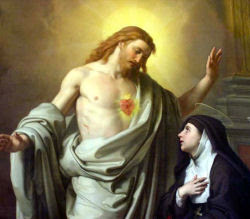
"Is it possible that there are souls who do not understand what the Blessed Eucharist is? Who are insensible to the Divine Presence.....to the mysterious and fervent effusions of the Sacred Heart of my Jesus? O Heart of Jesus! Heart of love!" "Yesterday, in the presence of Jesus in the Blessed Sacrament I felt myself burning so fiercely that I had to go away. I felt stunned that so many could stay so close to Jesus and not be reduced to ashes. I felt that I would be consumed. Jesus is such a sweet and irresistible Lover; how can one fail to love Him with one's whole heart and soul? How can one not wish to be wholly united in Him, and consumed in the flames of His holy love?"

Sunday, June 26, 2011

June 26, 2011: Solemnity of the Most Holy Body and Blood of Our Lord (Corpus Christi)


Click to hear audio homily
This past Sunday I received a call to go to a hospice and give communion to a man dying of cancer. He attended daily mass frequently and Sunday mass, and receiving Eucharist was very important to him. That Sunday afternoon, however, it seemed that is was not possible for him to receive because he was in and out of consciousness. His wife asked various questions, and he answered incoherently. Then his wife asked him, "Do you want to receive communion?" And immediately coming to his senses, he said clearly, "Yes!" I marveled at how he had unequivocal desire to receive the Eucharist.

For most of my youth and young adulthood, Eucharist did not mean much to me. It was something I did routinely, just like dipping my hand into the Holy Water font and making a sign of the Cross. When I moved away from home to attend college, one of the first things I gave up was receiving Eucharist. There were many more important things to do on Sunday, such as recovering from late night clubbing or going on a mountain biking ride. The seventh day that God gave for me to rest, I rested away from the Eucharist.

We want for food when we feel discomfort or weakness caused by not eating. When we are hungry, we get a strong desire or craving that wants to be satiated. Once we have received the Eucharist and know how Jesus satisfies our soul through the Eucharist, we feel discomfort and weakness of our soul when we stay away from Eucharist awhile. I felt it when I stayed away for several years. I didn't understand why I was feeling weak, so I tried other worldly distractions hoping that would solve the hunger. But the hunger persisted. Our First Reading describes my dilemma well:

Moses said to the people, "Remember how for forty years now the LORD, your God, has directed all your journeying in the desert, so as to test you by affliction and find out whether or not it was your intention to keep his commandments. He therefore let you be afflicted with hunger, and then fed you with manna...in order to show you that not by bread alone does one live, but by every word that comes forth from the mouth of the LORD.

Sometimes we learn a great lesson by being deprived of something. For that man in the hospice, he knew he hungered for Jesus in the Eucharist at the greatest challenge of his life--his own death. He wanted Jesus to guide and protect him and nourish him with trust in the midst of his greatest fear. After receiving the Eucharist, a reading of Psalm 23 was a great comfort to him. "The Lord is my shepherd, I shall not want. He makes me to lie down in green pastures; He leads me beside the still waters. He restores my soul; He leads me in the paths of righteousness For His name’s sake. Though I walk through the valley of the shadow of death, I will fear no evil; For You are with me; Your rod and Your staff, they comfort me."


He passed away two days later, and I did his funeral and buried him yesterday. Seeing how he hungered for Jesus in the Eucharist, I cannot but marvel at how he understood what Jesus said in our Gospel today: "Amen, amen, I say to you, unless you eat the flesh of the Son of Man and drink his blood, you do not have life within you. Whoever eats my flesh and drinks my blood has eternal life, and I will raise him on the last day." Many years ago I did not believe in the Eucharist, but now as I witness as a priest, everyday, hunger being satisfied by Jesus in the Eucharist, I hope and pray that you also experience your soul being satisfied through Our Lord in the Eucharist. It has been a great privilege for me the past year here at Immaculate Conception to witness your own firm faith in Jesus. I praise and thank God for this privilege.

Saturday, June 25, 2011

June 25, 2011 Saturday: 12th Week in Ordinary Time (A)

The following is for preparation for the Solemnity of the Most Holy Body and Blood of Our Lord (Sunday, June 27, 2011)
French philosopher Jean Guitton left us a forceful witness on Marthe Robin: “She was a peasant of the French countryside, who for thirty years took neither food nor drink, nourishing herself instead on the Eucharist alone, and every Friday she relived the pains of the Passion of Jesus through her stigmata. A woman who perhaps was the most unusual, most extraordinary and disconcerting of our age, but whom even in the age of television remained unknown to the public, buried in a profound silence… From our first meeting, I understood that Marthe Robin would have been a ‘sister of charity,’ always, as she was for thousands of visitors.”

Marthe Robin was born on March 13, 1902, in Châteauneuf-de-Galaure (Drôme), in France, to a family of peasants, and she spent her entire life in her parents’ home, where she died February 6, 1981. Marthe’s entire existence revolved around the Eucharist, which for her was “the one thing that cures, comforts, lifts, blesses, my Everything.” In 1928, after a serious neurological illness, Marthe found it almost impossible to move, especially to swallow because those muscles were affected. Moreover, due to an eye illness, she was forced to live in almost absolute darkness. According to her spiritual director, Father Don Finet: “When she received the stigmata, in early October 1930, Marthe had already lived with the pains of the Passion since 1925, the year in which she offered herself as a victim of love. That day, Jesus said she was chosen, like the Virgin, to live the Passion more intensely. No one else would experience it so completely. Every day she has endured more pain, and at night she does not sleep. After the stigmata, Marthe was not able to drink or eat. The ecstasy lasted until Monday or Tuesday.” Marthe Robin accepted all the sufferings for love of Jesus the Redeemer and the sinners He wanted to save. The great philosopher Jean Guitton, recalling his meeting with the visionary, wrote: “I found myself in that dark room of hers, confronted by the best-known contemporary critics of the Church: Novelist Anatole France (a critic whose books were condemned by the Vatican) and Dr. Paul-Louis Couchoud, a disciple of Alfred Loisy (an excommunicated priest whose books were condemned by the Vatican) and author of a number of books denying the historical reality of Jesus. From our first meeting, I understood that Marthe Robin would have been a ‘sister of charity’ always, as she was for thousands of visitors.” In fact, beyond the extraordinary mystical phenomena, extremely significant was the work of evangelization that Marthe managed to accomplish, despite her condition, thanks to the help of Father Finet, with whom she founded sixty “Foyers of Charity” groups (centers or homes of light, charity and love) throughout the world.

from http://www.therealpresence.org/eucharst/mir/english_pdf/Robin.pdf

Friday, June 24, 2011

June 24, 2011 Friday: 12th Week in Ordinary Time (A)

The following is for preparation for the Solemnity of the Most Holy Body and Blood of Our Lord (Sunday, June 27, 2011)
Alexandrina remained paralyzed at age 21 from a dramatic incident in which she fled from the threat of violence. She did not permit herself to be overcome by sadness and by loneliness, but thought: “Jesus, You are a prisoner in the tabernacle as I am here on my bed, so that we can keep company”. Following the physical sufferings from the paralysis, mystical sufferings were added: for four years, every Friday she saw the sorrows of the Passion, and after this period, for another 13 years until her death she was nourished only by the Eucharist. Her life became a continuous prayer for the conversion of sinners.

Alexandrina Maria was born in Balasar, Portugal on March 30, 1904. At age 14, in order to escape an attack by three men and to maintain her purity, she jumped from the window, but did not escape without suffering injury. The consequences were terrible, if not immediate. In fact, several years later, she became bedridden from a progressively increasing paralysis, from which she suffered for the remaining 30 years of her life. Yet, she did not despair, but entrusted herself to Jesus with these words: “As you are a prisoner in the tabernacle and I am a prisoner on my bed for doing Your will, so we can keep ourselves company". As a result, she began to live through ever more powerful mystical experiences, and from Friday, October 3, 1938 until March 24, 1942, for up to 182 times, she relived the sufferings of the Passion. Beginning in 1942 until her death, Alexandrina was fed only by the Eucharist, and during a period of convalescence at the Foce del Douro Hospital near Oporto, for forty days and forty nights she was under supervision by several doctors in her absolute fast and her condition of anuria (absence of urine). After 10 long years of paralysis which she had offered as Eucharistic reparation for the conversion of sinners, on July 30, 1935, Jesus appeared to her saying: “I have put you in the world so that you may draw life only from Me, to bear witness to the world how precious the Eucharist is. [...] “The strongest chain that keeps souls in bondage with Satan is the flesh and the sins of impurity. Never has there been such a spread of vices, wickedness and crimes as there is today! Never has there been so much sin [...] The Eucharist - My Body and Blood - Behold, the Eucharist is the salvation of the world.” Mary also appeared to her on September 12, 1949, with the Rosary in her hand, saying to her “The world is in agony and is dying in sin. My desire is for prayer, my desire is for penance. I have protected with this, my Rosary, all those whom I love and the whole world.” On October 13, 1955, the anniversary of the last apparition of the Blessed Mother at Fatima, Alexandrina was heard exclaiming: “I am happy, for I am on my way to heaven.” She died at 7:30 in the evening on that very day.

from http://www.therealpresence.org/eucharst/mir/english_pdf/Dacosta.pdf

Thursday, June 23, 2011

June 23, 2011 Thursday: 12th Week in Ordinary Time (A)

The following is for preparation for the Solemnity of the Most Holy Body and Blood of Our Lord (Sunday, June 27, 2011)
Jesus appeared to St. Catherine of Siena to assure her that a great flame does not diminish, even if it is used to light many candles. Such is the flame of the Holy Eucharist, because it does not weaken while enflaming the loyal faithful who come with their strong or weak faith. The stronger and weaker charity of each of the faithful is symbolic only by the flame’s dimension of the candles.


Regarding the Eucharist, Jesus confided the following words to St. Catherine of Siena: “You receive all the divine essence of the sweetest Sacrament in the whiteness in the bread. Just like the sun cannot be divided in the whiteness of the Holy Host. Let us suppose that the Sacred Host could be divided: even if it would be possible to fragment the Holy Eucharist into thousands of tiny Particles, in each one of the tiny Particles there is the presence of Christ, the whole God and the whole Man. In the same manner that a mirror would shatter into thousands of pieces, the Sacred Host will not shatter or divide the image of God and Man that you see in the Host; the image of God and Man is in each fragmented part. Contrary to fire, the image of the Host does not diminish in faith or divinity. Let us look at the following example: If you had one candle and the whole world would light its candle from that single candle, the light of the candle would not diminish and everybody would have a lighted candle. While it is true that those who participate in the candlelighting may have more or less flame, everyone would receive exactly the amount of fire to light their candle. Until that time that it can be better, this example stands. “If there were a lot of people bringing candles of all sizes – one person with two candles and one with six candles and one with a candle weighing an ounce and one with a candle weighing a pound or more - then you could see all the lit candles by color. By color, by its light, by its heat, you would judge that the person that has a one-ounce candle has less light than the one with a pound candle. This is how it is for those receiving the Holy Sacrament. Man carries his own candle so that he can receive the sacrament; however, that candle is unlit, but it is ignited when he receives the Eucharist. As a matter of fact, as you are all alike, made and created in my image and likeness and as Christians you are anointed with Holy Baptism, you can, therefore, grow in virtue as much as you like through my divine grace. You are not changing your spiritual life that I bestowed upon you, but you can grow and increase in love of virtue, using your free will with virtue, with charitable affection, while you still have the time, because once time has elapsed, it will no longer be possible.” 


from http://www.therealpresence.org/eucharst/mir/english_pdf/CatherineofSiena.pdf

Wednesday, June 22, 2011

June 22, 2011 Wednesday: 12th Week in Ordinary Time (A)

The following is for preparation for the Solemnity of the Most Holy Body and Blood of Our Lord (Sunday, June 27, 2011)
The message received by the nun, Saint Margaret Mary Alacoque of Paray-le-Monial, contains the “Twelve Promises of the Sacred Heart,” in which Jesus reveals the graces linked to this devotion. Love for the Sacred Heart of Jesus is directly tied to that of love for the Eucharist. As the great apostle of this devotion, the Jesuit priest Henri Ramiere wrote, “It is in the Eucharist that we truly find the Heart of Jesus nearest to us; it is in the Eucharist that He unites himself in a most intimate way to us, and we to Him.”


Saint Margaret received many mystical gifts and some revelations from Jesus. We list here below the “Twelve Promises of the Sacred Heart” which the Lord revealed to the saint:
1. To those devoted to My Sacred Heart, I will give all the graces and helps necessary to their state of life (Letter #141).
2. I will establish and safeguard peace in their families (Letter #35).
3. I will console them in all their afflictions (Letter #141).
4. I will be their sure refuge in life, and above all, at the hour of death (Letter #141).
5. I will pour abundant blessings on all of their labors and undertakings (Letter #141).
6. Sinners will find in My Heart an inexhaustible source of mercy (Letter #132).
7. Lukewarm souls will become fervent with the practice of this devotion (Letter #132).
8. Fervent souls will ascend rapidly to a higher perfection (Letter #132).
9. My blessing will remain in those places in which the image of the Sacred Heart will be displayed and venerated (Letter #35).
10. To all those who labor for the salvation of souls, I will give the grace to be able to convert the hardest hearts (Letter #141).
11. Persons who spread this devotion will have their names written forever in My Heart (Letter #141).
12. To all people who receive Communion on the first Fridays of nine consecutive months, I will give the grace of endless perseverance and of eternal salvation (Letter #86).

Monday, June 20, 2011

June 21, 2011 Tuesday: 12th Week in Ordinary Time (A)

The following is for preparation for the Solemnity of the Most Holy Body and Blood of Our Lord (Sunday, June 27, 2011)

The conversion of the atheist writer Andre Frossard, in the presence of the Holy Eucharist,has had great repercussions in the world. He himself recounted how his conversion came about in his book, God Exists. I Have Met Him (1969). Up to his final years, up to his final days, he would only say: “Since the time when I encountered God, I have never succeeded in growing tired of the mystery of God. Every day is something new for me. And if God exists, I should speak of it; if Christ is the Son of God, I should proclaim it loudly; if there is Life Eternal, I should preach it.”

Frossard’s testimonial: “Having entered a chapel in the Latin Quarter of Paris at 5:10 in the morning to look for a friend, I left at a quarter after 5 in the company of a friendship that was not of this earth. Having entered as a skeptic and an atheist…and ever more skeptical and atheistic, indifferent and preoccupied with so many things other than a God to Whom I never even gave a thought even to deny... I was standing by the door, looking around with my eyes for my friend, but did not succeed in finding him... “

My gaze passed from the shadows to the light...from the faithful gathered there, to the nuns, to the altar...and came to rest above the second candle burning to the left of the Cross (unaware that I was standing in the presence of the Blessed Sacrament). And at that point, suddenly a series of miracles unfolded whose indescribable force shattered in an instant the absurd being that I was, to bring to birth the amazed child that I had never been... At first the hint of these words, ‘Spiritual Life’ came to me... as if they had been pronounced in a whisper next to me... then came a great light... a world, another world of a radiance and a destiny that in one stroke cast our world among the fragile shadows of unfulfilled dreams... of which I felt all the sweetness... a sweetness that was active and upsetting beyond every form of violence, capable of breaking the hardest stone and that which is even harder than stone - the human heart. Its overflowing eruption, so complete, was accompanied by a joy which is the exultation of the saved, the joy of the shipwrecked who is picked up just in time. These sensations, which I find difficult to translate into a language which cannot capture these ideas and images, were all simultaneous... Everything is dominated by the Presence… of Him of Whom I would never be able to write His name without fear of harming its tenderness, of Him before Whom I have had the good fortune to be a forgiven child who wakes up to discover that everything is a gift… God existed and was present... one thing only surprised me: The Eucharist! Not that it seemed incredible, but it amazed me that Divine Charity would have come upon this silent way to communicate Himself, and above all that He would choose to become bread, which is the staple of the poor, and the food preferred by children… O Divine Love, eternity will be too short to speak of You.”


from http://www.therealpresence.org/eucharst/mir/english_pdf/Frossard.pdf

Saturday, June 18, 2011

June 19, 2011: The Solemnity of the Most Holy Trinity


A Homily by Fr. Fr Philip Heng, SJ at Church of St Ignatius – Singapore

During the week, I visited a family to bless their home; during my time there I observed how Mary, (not her real name), was very absorbed by her care and love for her first born son. Mary looked somewhat exhausted and when I remarked that she looked tired, she said, “Father, I have hardly slept for the past six weeks since my baby was born.” Mary went on to share how her son has to be fed every two hours during the night and then how he needs constant attention throughout the whole day. I could see that while Mary was so tired, she was at the same time filled with great joy and happiness that she is so blessed to have such a beautiful gift of her baby from God.

Then without any warning, her baby suddenly decided to give his mother a big “poo;” and when that happened Mary and everyone in the family had a good laugh and made a big joke out of it. Mary with great patience cleaned up the mess and with great love took her child away and after a short while brought him back fresh and clean, and begins to speak with even greater love and joy of her child. I could also see that the rest of the family too loves the child so much and has him as the centre of attention; more so when the baby is so adorable and beautiful.

I am sure many of you parents can relate very well to this story because it is a very human experience of what love is about. The whole story shows how much Mary loves her child and because of that she is able to go beyond her personal needs to provide for her child. While her sleepless nights and exhausting days are taking a toll on her, her daily selfless sacrifices remain meaningful and fulfilling because her love for her child is greater than all the pain and sacrifices that she has to go through.

This very human experience gives us a glimpse of our God in the Trinity. If human love of a mother can make us so selfless, God’s Love for us would be infinitely greater. Like Mary in our story who loves her child so much, God our Father, who created each of us out of Love, in an infinite way, loves us totally and unconditionally. The mystery of The Trinity is that God the Father, Son and Spirit together have each of us as the centre of their attention.

We are each God the Father’s most precious son and daughter. Like Mary, God’s Love for us, in an infinite way, is greater than the wrongs that we have done and the sins that we have committed. God is able to tolerate and forgive our sinful ways because regardless of our rejection of Him through our sins, He continues to forgive us unconditionally because ultimately we are each still His precious sons and daughters.

-Fr. Fr Philip Heng, SJ

Friday, June 17, 2011

June 18, 2011 Saturday: 11th Week of Ordinary Time (A)

“In revealing and in reliving on earth the very fatherhood of God, a man is called upon to ensure the harmonious and united development of all the members of the family. He will perform this task by exercising generous responsibility for the life conceived under the heart of the mother, by a more solicitous commitment to education, a task he shares with his wife, by work which is never a cause of division in the family but promotes its unity and stability, and by means of the witness he gives of an adult Christian life which effectively introduces the children into the living experience of Christ and the Church.”
(Blessed John Paul II)

Fathers need to “let their children see them praying. The image of a father on his knees shows, in an incredibly powerful way, that he acknowledges a head over him. And, if your children never see you praying, then praying night prayers with them won’t carry any weight. You have to be transformed yourself.”
(Steve Bollman, founder of That Man Is You, Catholic men's apostolate)

“We have to spend quiet time with God, talking to him about each of our children, about things going on in the family, about what my wife needs from me, about being a better father and better husband.”
(Mike Aquilina, father of six and author of Love in the Little Things: Tales of Family Life)

June 17, 2011 Friday: 11th Week of Ordinary Time (A)

“Do not store up for yourselves treasures on earth, where moth and decay destroy, and thieves break in and steal. But store up treasures in heaven, where neither moth nor decay destroys, nor thieves break in and steal. For where your treasure is, there also will your heart be." (Mt 6:19-20)

God is the Friend who wants to meet you with a gift. God doesn't need to see in you a perfectly balanced personality before considering you worthy of his gifts.

God is the one who loves you most, with your garbage, limitations, and problems, as well as the beauty that you may not be able to see at this time.

Let God impress you with his love. Even if you feel nothing when you read about God's love for you, keep believing. One day you will no longer need to believe, because you will know.

Even if you are angry with God, even if you believe God has "given you" this illness or these problems, still stake your life on God...Stake your life on the only One who can make you whole.

(from Surviving Depression: A Catholic Approach by Sr. Kathryn J. Hermes, FSP)

June 16, 2011 Thursday: 11th Week of Ordinary Time (A)

“In praying, do not babble like the pagans, who think that they will be heard because of their many words. Do not be like them. Your Father knows what you need before you ask him." (Mt 6:7-8)

Because God created us in the image and likeness of God, however, he created us for relationship. We were created to have and to maintain a relationship with God, with others, and with the whole of creation.

The Church is the "hospital" where we can rediscover the essential communion that our first parents lost, for the center of the Christian community is God. Health flourishes when we become truly what God has meant the human person to be.

We will be given the power to get up and walk out of a crippled past into a life of new meaning, joined to others in community, in peace with God, with ourselves, and with all of creation.

The little miracles that God brings about in our life include such basic things as the strength to get out of bed in the morning.

(from Surviving Depression: A Catholic Approach by Sr. Kathryn J. Hermes, FSP)

June 15, 2011 Wednesday: 11th Week of Ordinary Time (A)

The one who supplies seed to the sower and bread for food will supply and multiply your seed and increase the harvest of your righteousness. (2 Cor 9:10)

What a relief to know that it's not all up to us!...We can count on God standing with us and for us in our journey toward well-being.

Generally healing will be gradual. It is rarely dramatic. Frequently it comes under the simple gesture of one person reaching out to another.

Healing can begin when we admit that we cannot cure ourselves.

(from Surviving Depression: A Catholic Approach by Sr. Kathryn J. Hermes, FSP)

June 14, 2011 Tuesday: 11th Week of Ordinary Time (A)

For you know the gracious act of our Lord Jesus Christ, that for your sake he became poor although he was rich, so that by his poverty you might become rich. (2 Cor 8:9)

God knows you just as you are, with your history, your fears, your needs and tears that perhaps never seem to stop falling. God loves you just as you are.

God is walking toward you always, arms outstretched, able to help you find meaning in everything.

Having a meaning larger than oneself can help a person suffering from depression to take a step toward connection and presence.

(from Surviving Depression: A Catholic Approach by Sr. Kathryn J. Hermes, FSP)

Monday, June 13, 2011

June 13, 2011 Monday: St. Anthony of Padua


ST. ANTHONY OF PADUA—1195-1231 A.D.
from EWTN: http://www.ewtn.com/library/MARY/ANTHLIFE.htm

St. Anthony of Padua is one of the most famous disciples of St. Francis of Assisi. He was a famous preacher and worker of miracles in his own day, and throughout the eight centuries since his death he has so generously come to the assistance of the faithful who invoke him, that he is known throughout the world.

St. Anthony's Youth & ConversionSt. Anthony was born in the year 1195 A. D. at Lisbon (Portugal) where his father was a captain in the royal army. Already at the age of fifteen years, he had entered the Congregation of Canons Regular of St. Augustine and devoted himself with great earnestness both to study and to the practice of piety in the Monastery at Coimbra (Portugal).
About that time some of the first members of the Order of Friars Minor, which St. Francis has founded in 1206 A. D. came to Coimbra. They begged from the Canons Regular a small and very poor place, from which by their evangelical poverty and simplicity they edified everyone in the region. Then in 1219 A. D. some of these friars, moved by divine inspiration, went as missionaries to preach the Gospel of Christ to the inhabitants of Morocco. There they were brutally martyred for the Faith. Some Christian merchants succeeded in recovering their remains; and so brought their relics in triumph back to Coimbra.
The relics of St. Bernard and companions, the first martyrs of the Franciscan Order, seized St. Anthony with an intense desire to suffer martyrdom in a like manner. So moved by their heroic example he repeatedly begged and petitioned his superiors to be given leave to join the Franciscan Order. In the quiet little Franciscan convent at Coimbra he received a friendly reception, and in the same year his earnest wish to be sent to the missions in Africa was fulfilled.

St. Anthony's Arrival in ItalyBut God had decreed otherwise. And so, St. Anthony scarcely set foot on African soil when he was seized with a grievous illness. Even after recovering from it, he was so weak that, resigning himself to the will of God, he boarded a boat back to Portugal. Unexpectedly a storm came upon them and drove the ship to the east where it found refuge on coast of Sicily. St. Anthony was greeted and given shelter by the Franciscans of that island, and thus came to be sent to Assisi, where the general chapter of the Order was held in May, 1221 A. D..
Since he still looked weak and sickly, and gave no evidence of his scholarship, no one paid any attention to the stranger until Father Gratian, the Provincial of friars living in the region of Romagna (Italy), had compassion on him and sent him to the quiet little convent near Forli (also in Italy). There St. Anthony remained nine months as chaplain to the hermits, occupied in the lowliest duties of the kitchen and convent, and to his heart's content he practiced interior as well as exterior mortification.

St. Anthony, Preacher and TeacherBut the hidden jewel was soon to appear in all its brilliance. For the occasion of a ceremony of ordination some of the hermits along with St. Anthony were sent to the town of Forli. Before the ceremony was to begin, however, it was announced that the priest who was to give the sermon had fallen sick. The local superior, to avert the embarrassment of the moment, quickly asked the friars in attendance to volunteer. Each excused himself, saying that he was not prepared, until finally, St. Anthony was asked to give it. When he too, excused himself in a most humble manner, his superior ordered him by virtue of the vow of obedience to give the sermon. St. Anthony began to speak in a very reserved manner; but soon holy animation seized him, and he spoke with such eloquence, learning and unction that everybody was fairly amazed.
When St. Francis was informed of the event, he gave St. Anthony the mission to preach throughout Italy. At the request of the brethren, St. Anthony was later commissioned also to teach theology, "but in such a manner," St. Francis distinctly wrote, " that the spirit of prayer be not extinguished either in yourself or in the other brethren." St. Anthony himself placed greater value in the salvation of souls than on learning. For that reason he never ceased to exercise his office as preacher despite his work of teaching.
The number of those who came to hear him was sometimes so great that no church was large enough to accommodate and so he had to preach in the open air. Frequently St. Anthony wrought veritable miracles of conversion. Deadly enemies were reconciled. Thieves and usurers made restitution. Calumniators and detractors recanted and apologized. He was so energetic in defending the truths of the Catholic Faith that many heretics returned to the Church. This occasioned the epitaph given him by Pope Gregory IX "the ark of the covenant."
In all his labors he never forgot the admonition of his spiritual father, St. Francis, that the spirit of prayer must not be extinguished. If he spent the day in teaching and heard the confession of sinners till late in the evening, then many hours of the night were spent in intimate union with God.
Once a man, at whose home St. Anthony was spending the night, came upon the saint and found him holding in his arms the Child Jesus, unspeakably beautiful and surrounded with heavenly light. For this reason St. Anthony is often depicted holding the Child Jesus.

St. Anthony's DeathIn 1227 A. D., St. Anthony was elected Minister Provincial of the friars living in northern Italy. Thus he resumed the work of preaching. Due to his taxing labors and his austere penance, he soon felt his strength so spent that he prepared himself for death. After receiving the last sacraments he kept looking upward with a smile on his countenance. When he was asked what he saw there, he answered: "I see my Lord." He breathed forth his soul on June 13, 1231 A. D., being only thirty six year old. Soon the children in the streets of the city of Padua were crying: "The saint is dead, Anthony is dead."
Pope Gregory IX enrolled him among the saints in the very next year. At Padua, a magnificent basilica was built in his honor, his holy relics were entombed there in 1263 A. D. From the time of his death up to the present day, countless miracles have occurred through St. Anthony's intercession, so that he is known as the Wonder-Worker. In 1946 A. D. St. Anthony was declared a Doctor of the Church.


Saturday, June 11, 2011

June 12, 2011: Pentecost Sunday (A)


Fr. Raniero Cantalamessa is a Franciscan Capuchin Catholic Priest. Born in Ascoli Piceno, Italy, 22 July 1934, ordained priest in 1958. Divinity Doctor and Doctor in classical literature. Former Ordinary Professor of History of Ancient Christianity and Director of the Department of religious sciences at the Catholic University of Milan. Member of the International Theological Commission (1975-1981).


In 1979 he resigned his teaching position to become a full time preacher of the Gospel. In 1980 he was appointed by Pope John Paul II Preacher to the Papal Household in which capacity he still serves, preaching a weekly sermon in Advent and Lent in the presence of the Pope, the cardinals, bishops an prelates of the Roman Curia and the general superiors of religious orders.


Fr. Cantalamessa's homilies and talks can be found here: http://www.cantalamessa.org/en/index.php

Father Cedric Pisegna, C.P. is a Passionist Roman Catholic Priest whose ministry is dedicated to the life changing gospel of Jesus Christ.  He was ordained as a Deacon in 1990, then became an ordained priest in June of 1991. He attended the University of Massachusetts at Amherst receiving a B.S. degree in Social Work and a minor in Business.  At Southern Illinois University at Carbondale he studied Philosophy. He earned a Master of Divinity Degree with Bible Specialization at the Catholic Theological Union at Chicago and studied Scripture in Israel, Greece and Egypt.  At Northwestern University in Chicago he studied Speech and drama.  In 2003, he went to the North American College in Rome for the Theological Study Program for priests.  He travels across the U.S. and Canada preaching, writing, and producing for television.  Author of 11 books, his message is practical, inspirational, and orthodox. 

His homilies and talks can be found here: http://www.frcedric.org

Friday, June 10, 2011

June 10, 2011 Friday: 7th Week of Easter (A)


Introductions
from A Book of Courtesy: The Art of Living With Yourself and Others  by Sister Mary Mercedes, OP

The purpose of introductions is to make people known to each other and to make guests feel welcome and comfortable. The exchange of names along with descriptive or interesting information helps conversation begin more easily. Good introductions are helpful acts and remarks that reflect respect and thoughtfulness.

You may find it difficult to make an introduction unless you remember the following guides and customs--a no-fail method to avoid confusion.

Begin by preparing yourself mentally before speaking.
When there is an obvious difference in gender, age, or position between the persons you are introducing, state the following name first:
- The woman or girl
- The elder person
- The dignitary of church or state

Choose any of the following phrases to connect the names of those you are introducing. 
- Mrs. Calhoun, may I present Mr. Moller?
- Mrs. Calhoun, I want to introduce Mr. Moller?

Polish your introduction by adding phrases that describe relationships or positions and provide a basis for conversation. The introduction becomes more informative when you say, for example, "Mrs. Carson, this is my neighbor Mr. Fry."

When you are being introduced to someone, greet the new acquaintance with a friendly response such as "Hello," "How do you do?" "It is nice to meet you," or "I am so glad to meet you."

When saying good-bye after being introduced, one person might add, "I am very glad to have met you," and the other person could respond, "Thank you. It was nice to meet you also." Or one person might say, "I hope to meet you again soon," and the other person might respond, "Thank you. I hope so too."

With a warm, welcoming smile, genuine interest in the person, and an attention to names, you will find that introduction become easy and natural.

Thursday, June 9, 2011

June 9, 2011 Thursday: 7th Week of Easter (A)


Maintaining the Palace
from A Book of Courtesy: The Art of Living With Yourself and Others  by Sister Mary Mercedes, OP

The body is the palace of the soul. To sustain a positive attitude and a sympathetic manner, you need to take the best possible care of your health. This is one of your first responsibilities.  You owe it to yourself as well as to others to follow the basic formula for well-being: plenty of sleep and rest, regular exercise appropriate to your physical condition, lots of fresh fruit and vegetables in your diet, and moderation in all things. 

To keep your good health, always be willing to care for and about yourself. Self-discipline, self-control, and self-respect are the keys to physical and mental health.

Wednesday, June 8, 2011

June 8, 2011 Wednesday: 7th Week of Easter (A)


Daily Courtesies
from A Book of Courtesy: The Art of Living With Yourself and Others  by Sister Mary Mercedes, OP

The power to gain friends may in great measure depend on a happy disposition, but the power to keep them depends largely on loyalty, genuine caring, and acceptance of differences, as well as personal habits of promptness, order, personal neatness, and cheerfulness. 

Promptness is a cardinal rule when dealing with others: the person who is late for appointments or keeps people waiting for meetings, classes, or meals is an annoyance and is saying in essence, "I don't care enough about you to be on time."

Personal habits reveal a person's character. A disorderly room reflects a lack of self-respect and organization; this applies to dress and cleanliness as well. The person with self-esteem is neat in his personal appearance, stands and sits up straight, and dresses appropriately for the occasion.

Cheerfulness and good spirits allow you to live with a positive attitude; no one enjoys a grumbler or a complainer. A positive outlook makes you a pleasant companion.  

There are times when even the best-intentioned person makes a mistake. Certain words help to ease the blunder: "I'm sorry," "It was my fault," or, "I beg your pardon." "Please excuse me" allows for a graceful exit before leaving the table, the room, or the situation. Saying "I beg your pardon" or "Excuse me" is a must when it is necessary to pass in front of another person to get to your seat at the theater and it is absolutely impossible to pass behind him.

Good manners depend on a basic knowledge of etiquette. Etiquette embraces the rituals and practices that speak to the question "What am I supposed to do?" During your lifetime the rules of etiquette may change, but courtesy and good manners will always be important. 

Tuesday, June 7, 2011

June 7, 2011 Tuesday: 7th Week of Easter (A)


Friendships
from A Book of Courtesy: The Art of Living With Yourself and Others  by Sister Mary Mercedes, OP

The person who knows himself and his imperfections needs to be careful that it is not by his weaknesses that he attracts his friends, but by his strengths. Many men and women may be more popular than he is, and some of them deserve their popularity. Others have achieved popularity, however, without deserving it, because amiable weaknesses can seem more attractive than sterling worth. The popular individual may appear to be more fun than the disciplined professional or the serious person with a definite goal, but associating with him may not be constructive and may lead you into trouble.

In order to grow, friendships need loyalty, love, mutual consideration, and willingness to see the other's point of view. You choose your pleasures, your books, and your occupations, but you do not choose your friends; you only discover them. 

The knowledge of having a friend and of being one is the greatest blessing life affords. Perhaps no one can tell you how to make friends, since friends are born, not made; therefore, it is worthwhile to put forth your best effort to make yourself worthy of having good friends.

Monday, June 6, 2011

June 6, 2011 Monday: 7th Week of Easter (A)

A Sympathetic Manner
from A Book of Courtesy: The Art of Living With Yourself and Others  by Sister Mary Mercedes, OP 


Sister Mary Mercedes, OP (1871-1965) a Dominican Sister, was a teacher for more than fifty years. She wrote the original Book of Courtesy in 1910 for use at the Dominican Convent Upper School in San Rafael.


You may not think that living with others is an art, but it is the finest and most difficult of arts. By learning it early in life, you can save yourself many unpleasant experiences. You can master this art only if you treat others with courtesy. Courtesy is a way of living inspired by thoughtfulness, consideration, and respect for others and for yourself.

We all know people who, upon entering a room, bring with them a cloud. But we also know those whose arrival always brings sunshine. Some people are totally insensitive to others and are constantly ruffling their feelings. They make jokes about other people's appearances or embarrass their companions with sarcastic remarks and unkind criticism.

Others would never ruffle your feelings, but their manner is cold and they leave you cold. They seem to have no interest in you, not a glint of sympathy for your joys and sorrows; they never cheer you up and they often leave you feeling downhearted.

Some find it difficult to relate to others. They make constant demands on your time, calling and asking you to help with their problems, but they abandon you when you need them. They are self-centered and can think only of their own needs and desires.

Have you ever, in a burst of temper, wounded those you love best in the world, or spoken words that you would give anything to take back? You cannot live amicably with others until you have learned to control your temper. All it takes is making a habit of holding your temper instead of letting it control you.

Consideration is the heart of good manners, and a courteous manner is a grace that every person should acquire. Sympathy, sensitivity, and tact make you a desirable companion at home, in school, and at work. Conveying your support through a sympathetic smile or a friendly touch can help a friend through a bad time. Tactful behavior springs from the heart, from the desire to put others at ease and make them comfortable, even in awkward or difficult situations.

When we become aware of our own shortcomings, we can more readily understand and forgive the faults of others. Despite our many differences and, every one of us shares the same humanity with its strengths and its weaknesses.

Saturday, June 4, 2011

June 5, 2011: Ascension of Our Lord


Dear children! As I call you to prayer for those who have not come to know the love of God, if you were to look into your hearts you would comprehend that I am speaking about many of you. With an open heart, sincerely ask yourselves if you want the living God or do you want to eliminate him and live as you want. Look around you, my children, and see where the world is going, the world that thinks of doing everything without the Father, and which wanders in the darkness of temptation. I am offering to you the light of the Truth and the Holy Spirit. According to God’s plan I am with you to help you to have my Son, his cross and resurrection triumph, in your hearts. As a mother, I desire and pray for your unity with my Son and his works. I am with you; you decide. Thank you. (Our Lady's Message to Mirjana, June 2, 2011)


God our Father,
make joyful in the ascension of Your Son Jesus Christ.
May we follow Him into the new creation,
for His ascension is our glory and our hope.
We ask this through our Lord Jesus Christ, Your Son,
who lives and reigns with You and the Holy Spirit,
one God, for ever and ever. +Amen.


Friday, June 3, 2011

June 3, 2011 Friday: 6th Week of Easter (A)

Master Your Senses and Passions Through Discipline
from The Hidden Power of Kindness by Fr. Lawrence G. Lovasik


Look for happiness not in selfishness, but in self-denial. The Son of God preached self-denial to spur us on the way to happiness. "Do not think that I have come to bring peace on earth; I have not come to bring peace, but a sword." (Matt 10:34) He meant that He had come to wage war against self and selfish passions. He came to free men from the misery into which their selfishness had led them. 


Love calls for generosity and self-sacrifice. Love is the heart and soul of religion. Love is not content with fair words but seeks to assert itself by deeds. Without practicing self-sacrifice, you are pleasing only to yourself.


The Holy Spirit sanctifies souls through the gift of grace and inspires souls to great generosity in the service of God and their neighbor. His grace gave to the martyrs courage to die for the Faith and to the saints the fortitude to lead holy lives and perform heroic deeds of virtue.


In this life, sacrifice must be joined to love. The love of God cannot be practical if we do not renounce inordinate self-love--that is, the threefold concupiscence of the flesh, the eyes, and the pride of life. 


Passions are selfish and blind in themselves. They need direction. If left to choose its own course, a passion can easily become like an insane driver at the wheel of a high-powered automobile. Discipline is necessary if you wish to have order in your life. Your passions and emotions should be under the control of your reason, enlightened by faith, and your reason and intelligence should be under the control of God. If one of the passions gets out of line, your reason, operating through the power of the will, aided by grace, must put it in its proper place. Otherwise, the passions will dominate you. 


St. Vincent de Paul gives us this advice: "He who would advance in perfection should take particular care not to allow his passions to govern him, which will destroy with one hand the edifice he builds with the other. To be master of one's self, it is necessary to begin early to resist our inclinations; for if once [they are] deeply rooted and strengthened, there is hardly ever a remedy." 


An important part in achieving perfect self-control consists in discovering and admitting your predominant fault. Once you have done this, your efforts will be concentrated, and you stand as much better chance of success against your enemy. 

Thursday, June 2, 2011

June 2, 2011 Thursday: 6th Week of Easter (A)

A Supernatural Motive Increases the Benefits of Selflessness
from The Hidden Power of Kindness by Fr. Lawrence G. Lovasik


Selfishness often darkens the vision and restrains the hand stretched forth to do a kindness. Do not be one of those who, for he sake of honor or praise from people, are ready to make great sacrifices, but neglect the little acts of kindness that add more luster to their name than do great deeds inspired by selfish motives. A kind word or a kind act is like lighting another man's candle with your own, which loses none of its brightness by what the other gains.


The tendency to be self-centered is strong in most of us. This is why St. Francis de Sales states, "Our principal business should be to conquer ourselves, and to become more perfect every day in this practice. It is particularly necessary that w should apply ourselves to be victorious in little temptations, such as boastfulness, suspicion, jealousy, indolence, and vanity. By so doing, we shall obtain the strength to resist greater ones."


Check up on yourself regarding your own self-centeredness which shows up itself in self-satisfaction,the seeking of personal advantages, or a low opinion of others. Perhaps you let yourself get in your way entirely too frequently. Try to "get out of yourself": rid yourself of gloomy obsession; stop brooding over hurt feelings and apparent wrongs. Instead, make every effort to foster cheerful thoughts, to look at the miseries of others in life and see them through their eyes, and to cultivate a tender helpfulness toward them. In general, try to exercise the charity upon them that you would so much appreciate, if it were bestowed upon you. 


To do good to others in the hope that, in turn, our Lord will be good to you is a supernatural motive, even if it is self-centered. To do good to others with the consciousness that Christ asks it of you is less egoistic. To do good to others because you are convinced that Christ will consider it as having done to Him personally is a sign of pure love of God. To do good to others because thereby you can please God, and you want to give Him the best you can, is perfect love of God.


Do all the good to others that circumstances allow. If you concentrate on yourself too often, your life will be flat and empty. Lively interest in others makes you rise above the pettiness of self-love. Self-love is to be dissolved in the crucible of a common interest in people. Self-effacement in order that others may be made happy is a lifework that will be most richly rewarded by God. It is Christlike to give generously of your kind thoughts, your heartening words, and your kind deeds. 

June 1, 2011 Wednesday: 6th Week of Easter (A)

Make Others Feel Important
from The Hidden Power of Kindness by Fr. Lawrence G. Lovasik


If you want to make friends, go out of your way to do things for other people--things that require time, energy, unselfishness, and thoughtfulness. Greet people enthusiastically and sincerely. A man's name is to him the most important sound in his language. One of the simplest ways of gaining good will is by remembering names and making people feel important. Take the time and energy necessary to concentrate and fix names indelibly in your mind.


Make other people feel important, and do it sincerely. If you are so selfish that you cannot radiate a little happiness and pass on a bit of honest appreciation without trying to get something out of the other person in return, you will meet with failure. The only return you should try to get out of someone is the feeling that you have done a favor for him without his being able to do anything whatever in return for you. That is a feeling that lingers in your memory long after the incident has passed.


There is a law that, if obeyed, will bring you countless friends and constant happiness. Jesus taught it centuries ago and summed up in one sentence: "Do unto others as you would have others do unto you." (Matt 7:12) You want the approval of those with whom you come in contact. You want recognition of your true worth. You do not want to listen to cheap, insincere flattery, but you crave sincere appreciation. So obey the Golden Rule, and do for others what you would have others do for you--always and everywhere.